- VIAC
-
ARBITRATION
- Arbitrate at VIAC
- VIAC eCase
- Combination of Arbitration and Mediation
- International Arbitration
- Resources
- NEWS & EVENTS
- Contact
-




On the morning of 17 January 2026, in Ho Chi Minh City, the Society of Construction Law of Vietnam (SCLVN), in collaboration with the Vietnam International Arbitration Centre (VIAC) and Ho Chi Minh City University of Technology – Vietnam National University Ho Chi Minh City, successfully organized the seminar entitled “The 2025 Law on Construction – Key Considerations in Construction Contracts and Legal Risk Management.”
.jpg)
The Conference followed the National Conference on the same topic held in Hanoi on 9 January, attracting the participation of more than 400 delegates, including experts in the fields of construction and law, as well as representatives from state management agencies, business associations, enterprises, jurists, and lawyers in Ho Chi Minh City.
In his opening remarks, Assoc. Prof. Dr. Pham Tran Vu - Vice Rector of Ho Chi Minh City University of Technology, Vietnam National University Ho Chi Minh City, emphasized the strategic importance of the construction sector, describing it as the “backbone” of the Vietnamese economy through to 2030. In response to the need for synchronized infrastructure development and enhanced international competitiveness, Assoc. Prof. Dr. Pham Tran Vu affirmed that the implementation of the 2025 Law on Construction is a key factor in promoting the country’s industrialization and modernization. He also highlighted the role of the seminar in advancing the strategic cooperation model among the “State – Universities – Enterprises,” with a focus on providing practical legal solutions and supporting businesses in proactively addressing risks in an increasingly demanding market environment.
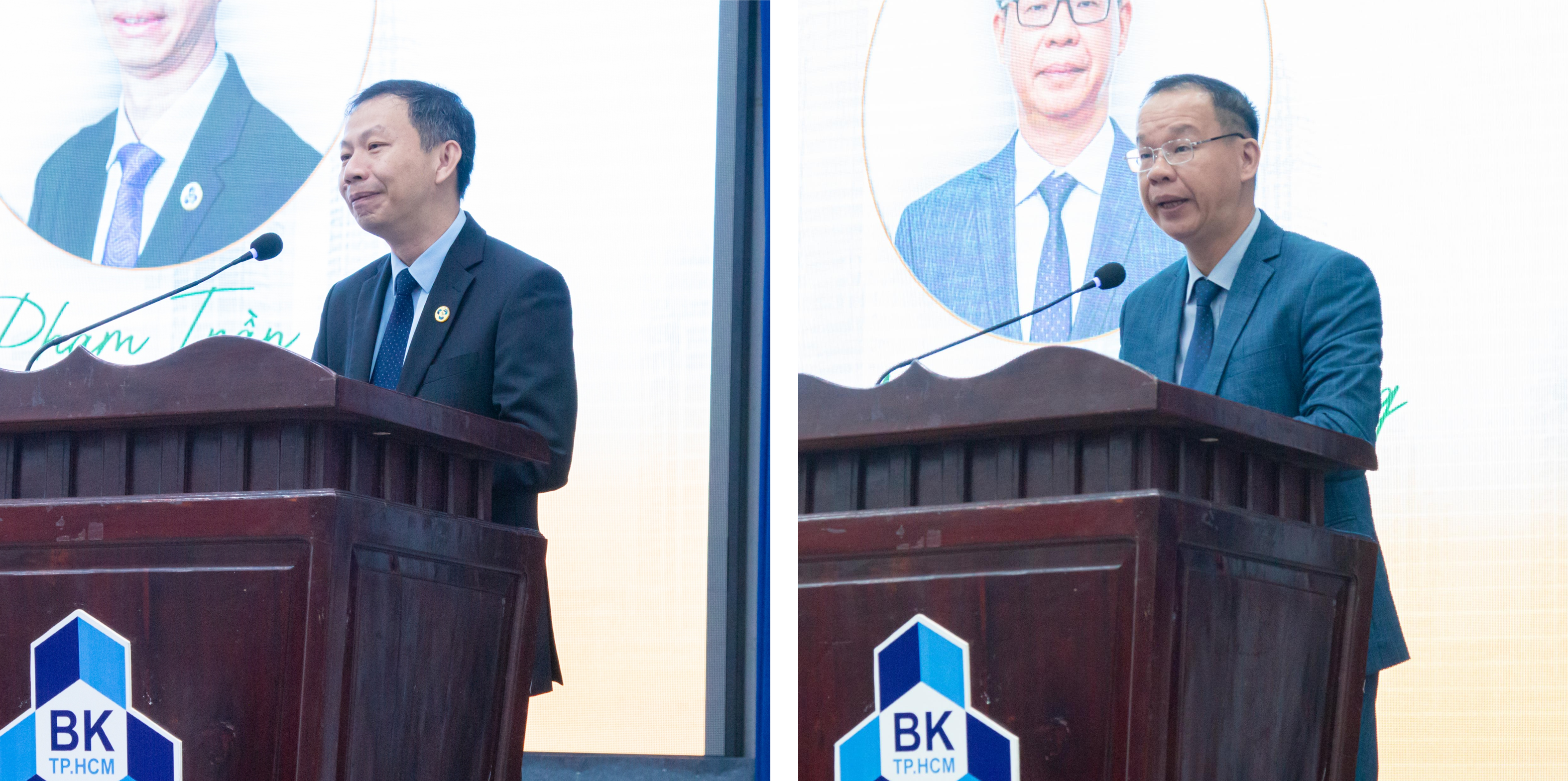
Assoc. Prof. Dr. Pham Tran Vu – Vice Rector of Ho Chi Minh City University of Technology, Vietnam National University Ho Chi Minh City & Mr. Nguyen Nam Trung – President of the Society of Construction Law of Vietnam (SCLVN)
Representing the co-organizing institution, Mr. Nguyen Nam Trung - President of the Society of Construction Law of Vietnam (SCLVN), stated in his opening remarks that the 2025 Law on Construction introduces numerous new requirements for professional practice in the construction sector, particularly in contract management and the prevention of legal risks. He expressed his expectation that the 2025 Law on Construction would become a “breath of fresh air” for the construction industry, with its streamlined approach and harmonization with Vietnam’s existing legal system, thereby providing a solid foundation for the sustainable development of businesses. He also shared that SCLVN, in particular, and professional organizations in general, have continuously strived to support their members, enterprises, and practitioners in accessing, properly understanding, and effectively applying the new legal provisions.
Opening the first discussion session, Mr. Bui Van Duong - Deputy Director General of the Department of Construction Investment Economics and Management under the Ministry of Construction, VIAC’s Listed Arbitrator, delivered the keynote presentation focusing on the major new provisions of the 2025 Law on Construction. Mr. Duong explained that the reform measures are grouped into three main categories: (i) reforming methods and improving the efficiency of construction investment management; (ii) reducing and simplifying administrative procedures and business investment conditions; and (iii) providing a clearer delineation between the responsibilities of state management authorities and those of the entities participating in construction activities. Beyond outlining the legislative direction, he also highlighted practical issues that businesses should consider during implementation, thereby establishing a strategic framework of reference and laying an important foundation for the subsequent in-depth discussion sessions.
.jpg)
Mr. Bui Van Duong – Deputy Director General of the Department of Construction Investment Economics and Management, Ministry of Construction, VIAC’s Listed Arbitrator
Discussing the new features of the 2025 Law on Construction, experts at the seminar agreed that this legislation can only truly fulfill its role as an “important milestone” if it is widely disseminated and accompanied by consistent guidance for practical application. Considering the key changes regarding administrative simplification and enhanced responsibilities of relevant stakeholders, enterprises, contractors, as well as lawyers and engineers, need to proactively improve their capabilities in contract drafting, contract management, and risk control from the project preparation stage. The shift in management methods toward reducing prior inspections, strengthening post-inspections, and clearly defining state management responsibilities imposes stricter requirements on cost management capacity and the ability to handle changes in the scope of work. If stakeholders fail to promptly adapt to the new regulations, legal risks and disputes in the construction sector may not decrease but instead become more complex.
The first discussion session on “Cost Management and Changes in Construction Contracts” was moderated by Mr. Pham Anh Tuan - Vice President of the SCLVN. The session featured Mr. Ho Ngoc Son - Deputy Director General of the Department of Construction Investment Economics and Management, Ministry of Construction; Assoc. Prof. Dr. Do Tien Sy - Lecturer of the Construction and Construction Management Division, Faculty of Civil Engineering, Ho Chi Minh City University of Technology – Vietnam National University Ho Chi Minh City; and Mr. Nguyen Thanh Long - Co-founder and Chief Executive Officer of VinaQS Co., Ltd. The discussion focused on clarifying practical issues relating to price adjustments, changes in the scope of work, risk allocation, and contractual responsibilities under the new legal framework.
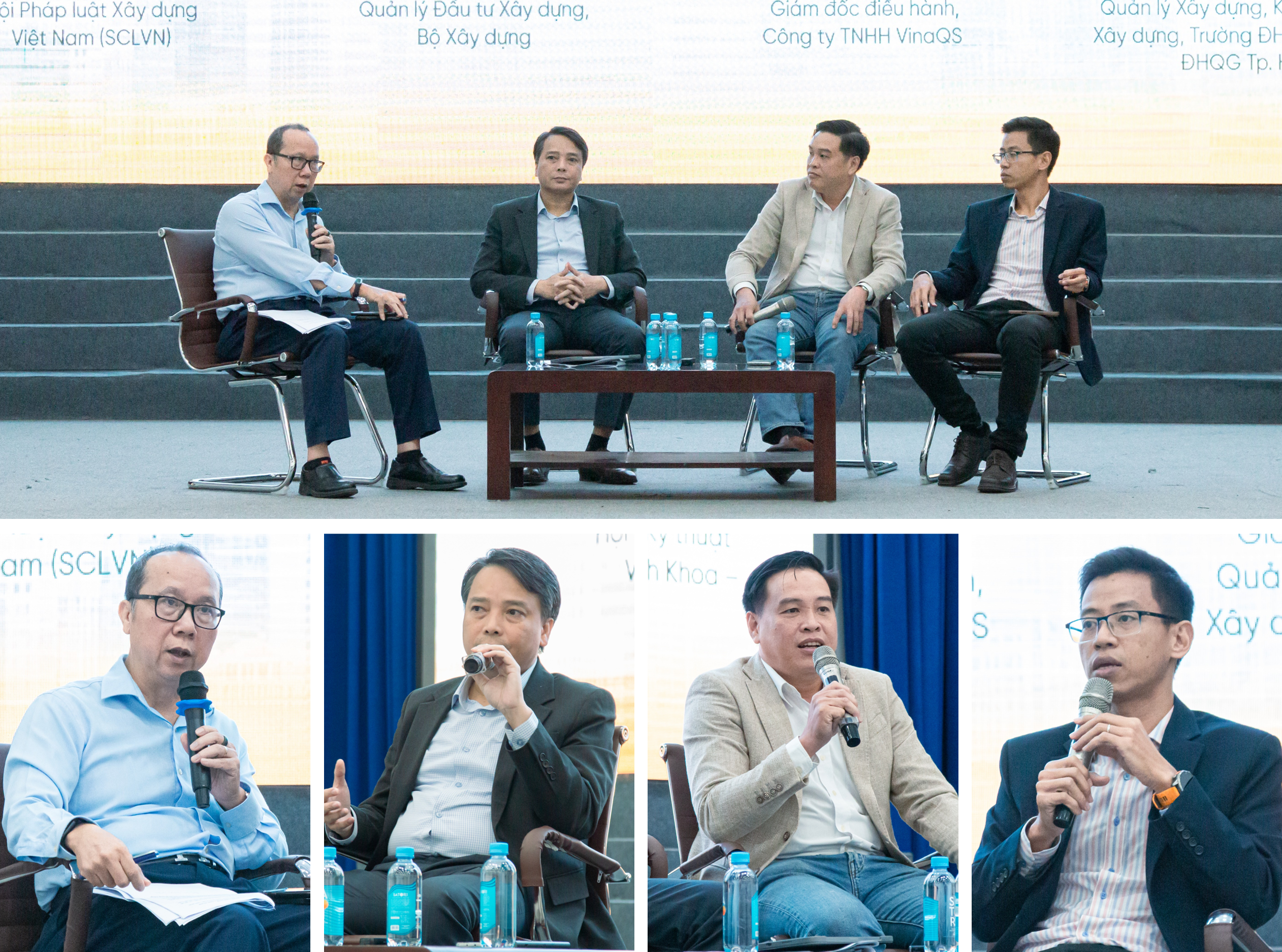
Experts discussing at Session 01
Opening the session, Mr. Pham Anh Tuan - Vice President of SCLVN, raised the issue of the most significant reform philosophy introduced by the 2025 Law on Construction. Addressing this matter, Mr. Ho Ngoc Son - Deputy Director General of the Department of Construction Investment Economics and Management, Ministry of Construction, highlighted the breakthrough transition from the principle of “accurate and sufficient calculation” to the approach of “gradual specification through a roadmap.” Accordingly, the total investment amount at the project preparation stage will be determined at a general level and progressively specified during implementation, allowing for flexible application of tools such as investment rates or price references from similar international projects to better align with actual market conditions.
Following Mr. Son’s presentation, Mr. Nguyen Thanh Long - Co-founder and Chief Executive Officer of VinaQS Co., Ltd., shared observations from several international models and provided comparative analyses of management approaches in the United States, Japan, and China. He proposed prioritizing the use of actual market prices and emphasized the importance of developing a large-scale database (Big Data) on material unit prices to make cost management more flexible and effective.
From a technological and academic perspective, Assoc. Prof. Dr. Do Tien Sy - Lecturer of the Construction and Construction Management Division, Faculty of Civil Engineering, Ho Chi Minh City University of Technology – Vietnam National University Ho Chi Minh City, emphasized the urgent need for digital transformation through the application of Building Information Modeling (BIM). He affirmed that integrating BIM with technologies such as drones would optimize quantity surveying (QS) activities and shorten project timelines. At the same time, Vietnam’s legal framework should adopt a more “open” approach to recognize risk management costs and specialized legal consultancy costs in accordance with international practices, ensuring sustainability for projects involving foreign elements.
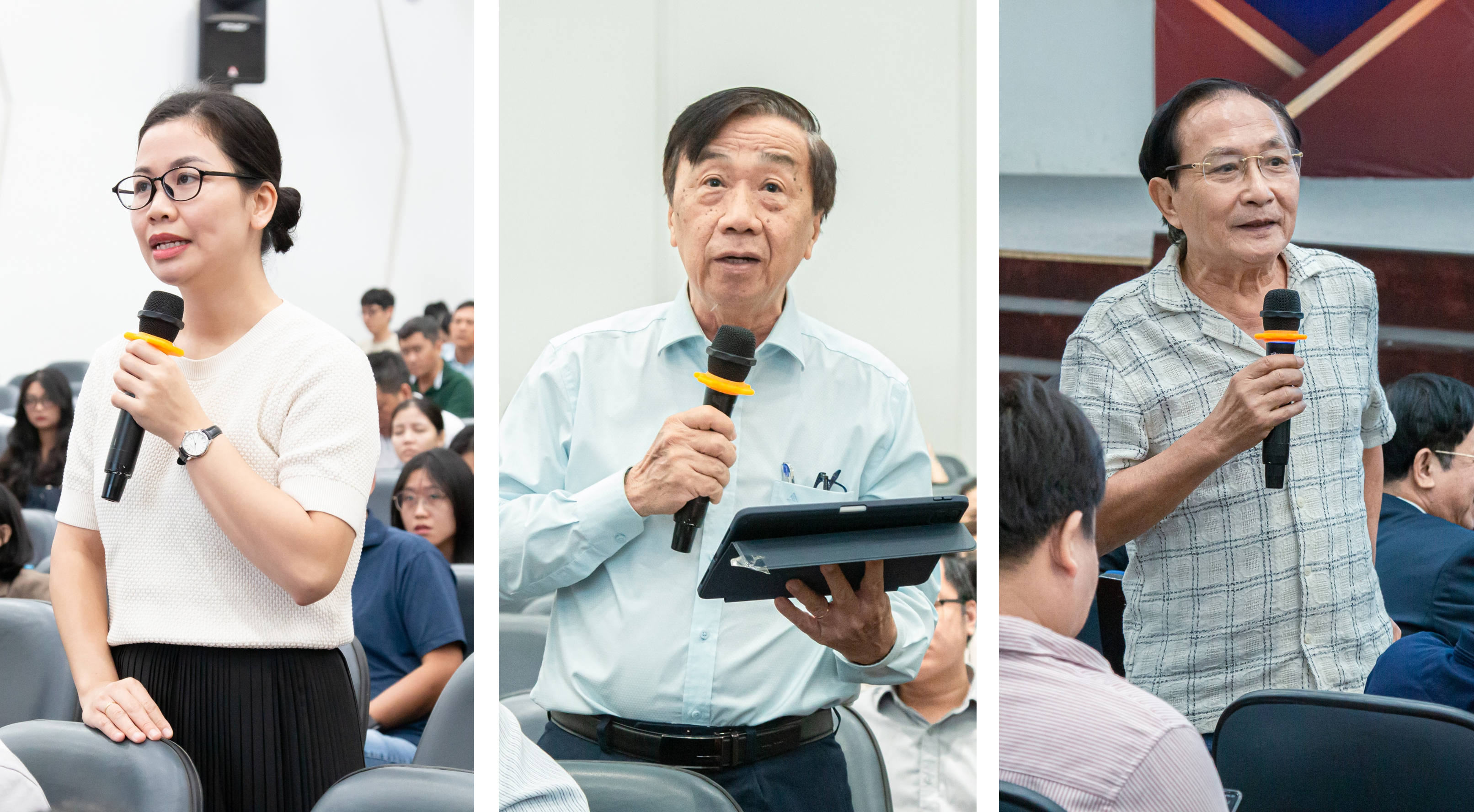
Delegates raising questions on the discussion topic of Session 01
The second discussion session, entitled “Prevention and Resolution of Construction Disputes – Liquidated Damages and Dispute Resolution Mechanisms,” was moderated by Lawyer Nguyen Manh Dung - Director of ADR Vietnam Law Company Limited and Vice Director of the Vietnam Institute of International Arbitration Research and Training (VIART) under VIAC. The session featured Mr. Nguyen Bac Thuy - Head of the Construction Economics and Contract Division, Department of Construction Investment Economics and Management, Ministry of Construction; Lawyer Nguyen Trung Nam - Founding Lawyer of EPLegal Law Firm, Deputy Director of the Vietnam Mediation Centre (VMC) under VIAC, and VIAC’s Listed Arbitrator; and Lawyer Tong Thi Thu Thao - Member of the Inspection Committee of SCLVN, Head of Legal – Contract Management Department at Ricons Construction Corporation. During Session 02, the experts presented liquidated damages mechanisms and assessed the current construction dispute resolution mechanisms.
Recognizing construction as a highly complex sector, Lawyer Nguyen Manh Dung raised issues concerning the scope of legal application in practice. Accordingly, in the resolution of construction disputes, determining the applicable legal framework remains one of the current challenges, particularly when disputes are not only governed by the Law on Construction but also intersect with other relevant laws.
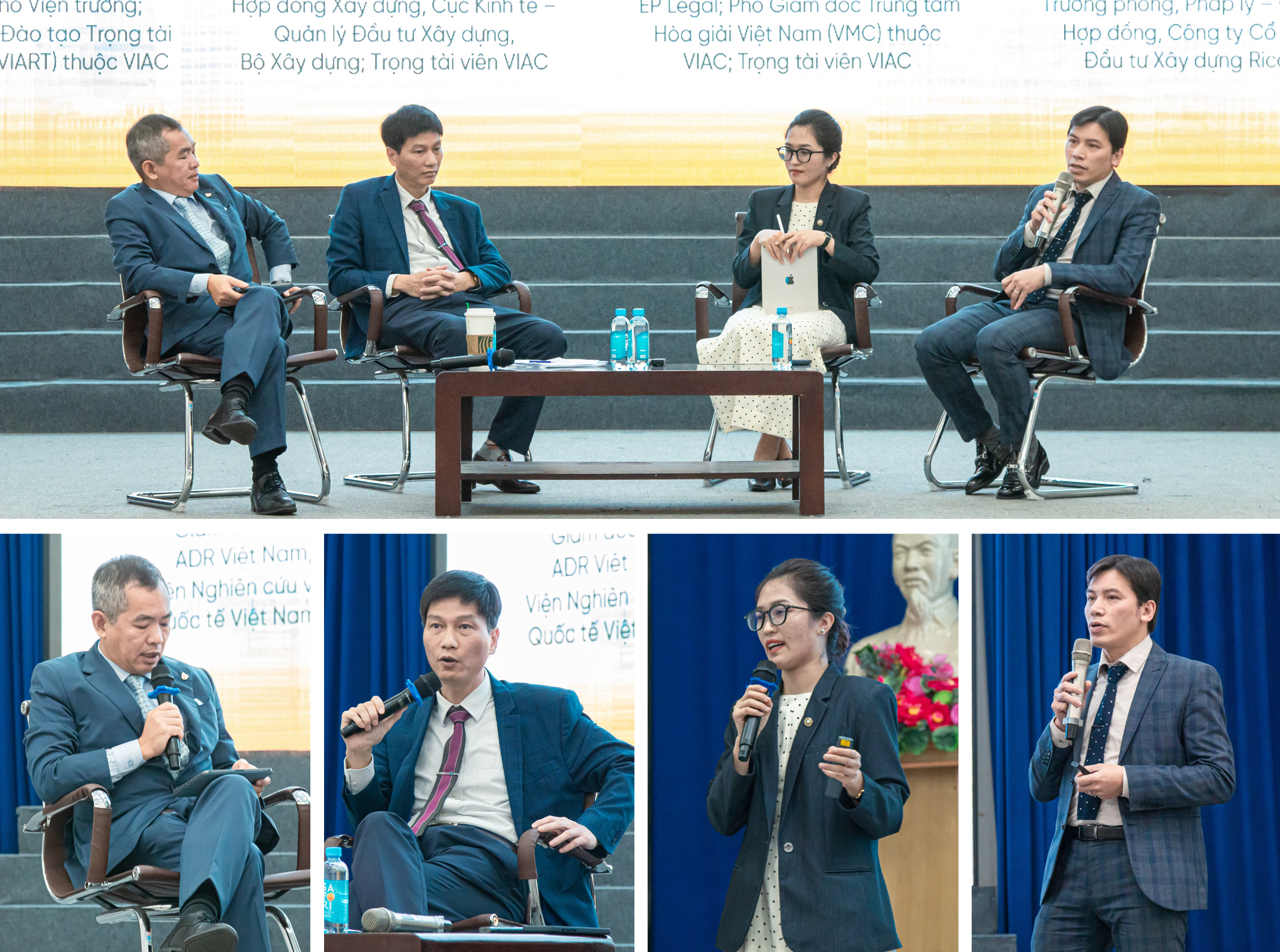
Experts discussing at Session 02
Mr. Nguyen Bac Thuy - Head of the Construction Economics and Contract Division, Department of Construction Investment Economics and Management, Ministry of Construction, stated that Clause 2, Article 4 of the 2025 Law on Construction clearly establishes the principle of legal application, prioritizing the application of the Law on Construction. Where the Law on Construction does not contain relevant provisions, other laws such as the Civil Code, the Law on Public Investment, and the Law on Public-Private Partnership (PPP) shall apply, thereby excluding the application of the Law on Commerce to avoid conflicts of law, particularly in matters such as contractual penalties. Mr. Thuy also emphasized the amendments regarding dispute resolution methods under the revised law. Accordingly, the 2014 Law on Construction only recognized the Dispute Adjudication Board (DAB) mechanism and primarily applied it to projects funded by state capital, whereas the new Law on Construction expands the framework by allowing more flexible application of dispute resolution methods in accordance with international practices. This is considered to establish a legal foundation for the operation of DB/DAB mechanisms, reduce the need to bring disputes before courts, and align with the international trend toward diversification of dispute resolution methods.
From her professional practice, Lawyer Tong Thi Thu Thao, Member of the Inspection Committee of SCLVN, Head of Legal – Contract Management Department at Ricons Construction Corporation, pointed out several common mistakes made by enterprises when drafting construction contracts, leading to ambiguity or inconsistencies with other contractual provisions. The 2025 Law on Construction requires a fundamental change in contract drafting techniques, particularly in clearly defining dispute resolution procedures and the order of priority of contractual documents to ensure enforceability. Ms. Thao emphasized that dispute resolution clauses should be developed based on the specific objectives of each project rather than mechanically adopting standard templates. Such clauses must use clear and precise terminology, establish reasonable and non-overlapping dispute resolution procedures, and specify applicable timelines and legal consequences.
She also shared insights into international dispute resolution models, including the Dispute Adjudication Board (DAB/DAAB) mechanism under FIDIC. This mechanism serves as a mandatory pre-arbitration procedure under FIDIC (Golden Principle No. 6 of the FIDIC Golden Principles published in 2019), before a party may refer to arbitration.
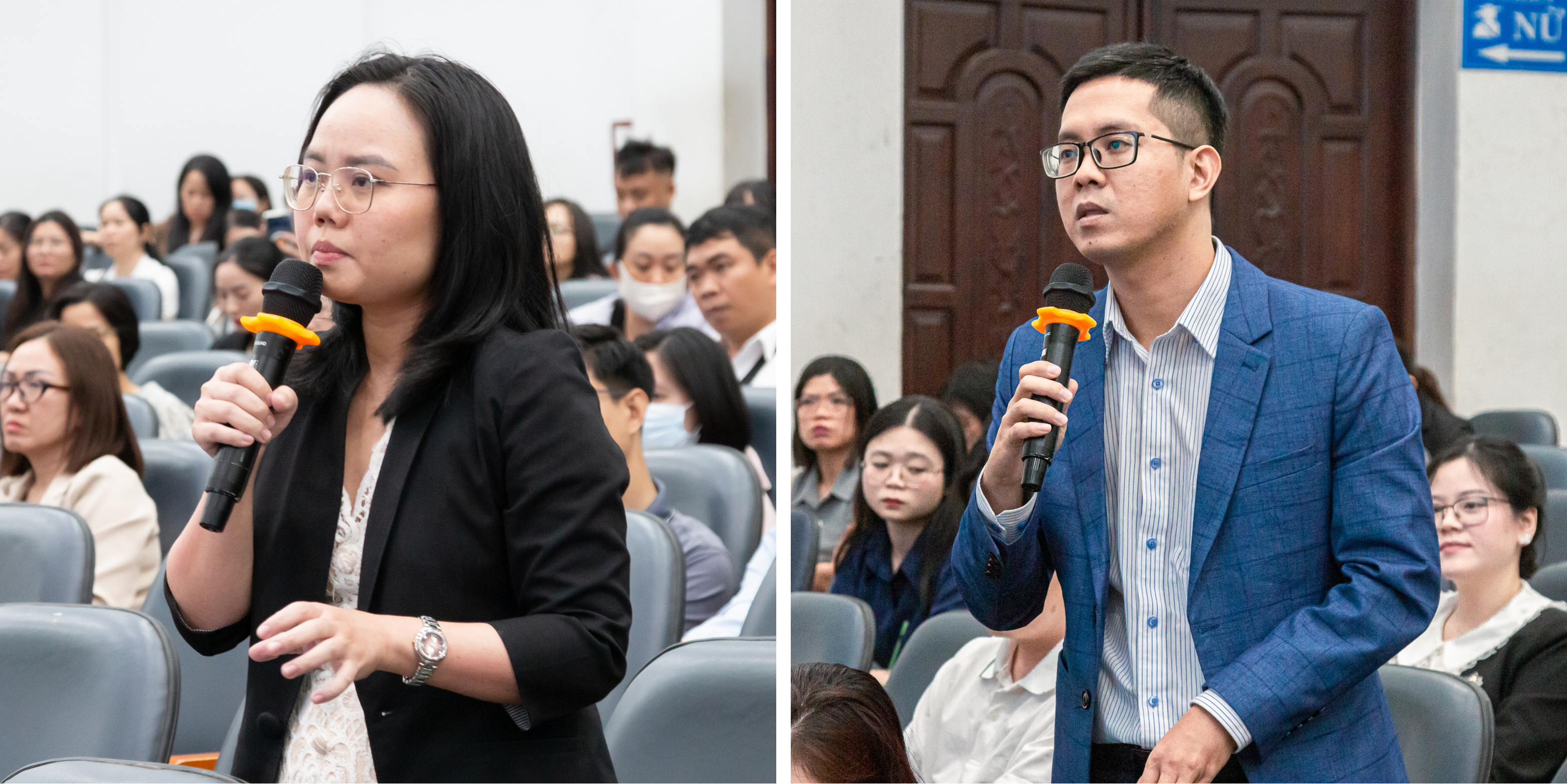
Delegates raising questions on the discussion topic of Session 02
Following Lawyer Thao’s remarks, Dr. Lawyer Nguyen Trung Nam - Founding Lawyer of EPLegal Law Firm, Deputy Director of the Vietnam Mediation Centre (VMC) under VIAC, and VIAC Arbitrator, stated that Expert Determination, together with DAB/DAAB mechanisms, are effective dispute resolution methods in the construction sector. According to him, many disputes concerning delayed payments may last from several years to five years, causing contractors, particularly small-scale enterprises, to face the risk of cash flow disruption. The application of DAB/DAAB enables disputes to be resolved within a defined timeframe, accompanied by interim payment mechanisms, thereby maintaining project operations and reducing the risk of insolvency. In particular, DAAB, with its focus on dispute prevention, is considered more effective and is increasingly being adopted in international practice.
Further discussing construction disputes, the experts also agreed that damage assessment is one of the most challenging stages. Dr. Lawyer Nguyen Trung Nam emphasized that Liquidated Damages (LD) are a specific and widely used mechanism in construction contracts, particularly under FIDIC standard forms. From a comparative legal perspective, common law systems do not consider LD clauses as penalty clauses, while civil law systems adopt a more flexible approach. In Vietnam, Article 86 of the Law on Construction has officially codified the LD mechanism. This is considered an important development, clarifying the legal basis for liquidated damages provisions in construction contracts, reducing the risk of disputes and the invalidation of such clauses when disputes arise.
At the Conference, experts shared the common view that the 2025 Law on Construction represents a breakthrough in institutional reform. However, for the values and objectives of the law to be effectively realized, raising awareness and promoting a legal culture are essential to support businesses in proactively managing risks. When legal regulations are applied as supportive tools rather than barriers, the construction sector can achieve sustainable development and make direct contributions to the country’s socio-economic growth.
.jpg)
Prof. Dr. Le Hong Hanh – President of the Vietnam International Arbitration Centre (VIAC)
In his closing remarks, Prof. Dr. Le Hong Hanh, President of the Vietnam International Arbitration Centre (VIAC), stated that the law is the “bottleneck of all bottlenecks”; therefore, the completion and promulgation of the 2025 Law on Construction is an essential step to unlock development resources for the country. He further emphasized that, in the context of increasing construction-related disputes, commercial arbitration serves as an effective, flexible dispute resolution mechanism that is aligned with international practices, helping to protect the legitimate rights and interests of parties in the construction sector.
The Conference contributed to supporting the business community and practitioners in accessing and effectively applying the new provisions of the Law on Construction, while also raising awareness of legal risk management throughout the project investment process. It also served as an important forum for academic and practical exchange, enabling experts to analyze and provide comments on the new regulations. The contributions and discussions at the event provide valuable practical foundations for regulatory authorities in further developing guiding decrees for the implementation of the 2025 Law on Construction in the future.


![[Recap LMS 2026] Business Legal Lens (BLL) #02: “Force majeure: The gap between business understanding and legal approach”](/images/News-and-Events/2026/News/LMS 2026/BLL02/IMG_0136.jpg)
![[Recap LMS 2026] VIAC & ITPC co-organized the Business Legal Lens (BLL) #01: “Conditions precedent in loan agreements: Understanding correctly to prevent risks”](/images/News-and-Events/2026/News/LMS 2026/BLL 01/IMG_8873.jpg)
![[Recap LMS 2026] Talkshow “Exemption from liability for technology-related risks in logistics transactions”](/images/News-and-Events/2026/News/LMS 2026/Logistics/LMS2026_2708---Slideshow-1.jpg)
![[Recap LMS 2026] Talkshow “Commercial contracts with counterpart clauses – Streamlining contract formation or increasing legal risks?"”](/images/News-and-Events/2026/News/LMS 2026/Thuong mai/LMS2026_2008_Speakers.png)
![[Recap LMS 2026] Talkshow “Arbitral jurisdiction in resolving disputes arising from digital financial transactions"](/images/News-and-Events/2026/News/LMS 2026/Tai chinh/LMS2026_260813__Backdrop.png)



.png "Trường đại học ngoại thương")