
- VIAC
-
ARBITRATION
- Arbitrate at VIAC
- VIAC eCase
- Combination of Arbitration and Mediation
- International Arbitration
- Resources
- NEWS & EVENTS
- Contact
-





The conference attracted more than 300 participants, including experts in the fields of construction and law, representatives from state management agencies, business associations, enterprises, jurists, and lawyers from Hanoi and surrounding localities. The event provided an in-depth forum for discussion on the new features of the amended Law on Construction, as well as prominent challenges in the practice of negotiating, performing, and managing risks arising from construction contracts.In his opening remarks, Prof. Dr. Le Hong Hanh - President of the Vietnam International Arbitration Centre (VIAC), emphasized that the amended 2025 Law on Construction would establish an important legal foundation to remove bottlenecks in construction investment activities. In recent years, construction-related cases have accounted for a significant proportion of the total disputes resolved at VIAC, reflecting the high-risk nature of this sector while demonstrating the increasingly important role of commercial arbitration as an effective, flexible dispute resolution mechanism aligned with international practices. In addition, VIAC continues to accompany the business community and legal professionals in identifying, controlling, and effectively preventing legal risks.

Prof. Dr. Le Hong Hanh – President of the Vietnam International Arbitration Centre delivered the opening remarks
In his opening remarks, Assoc. Prof. Dr. To Van Hoa - Rector of Hanoi Law University, emphasized that the 2025 Law on Construction plays a particularly important role in completing the legal framework governing construction investment activities, a sector that directly affects socio-economic development and people’s lives. Accordingly, he highly appreciated the role of legal education institutions in contributing to the process of developing and improving Vietnam’s legal system, as well as the significance of specialized academic forums such as this seminar in connecting academia, policymaking, and practical legal application.

Assoc. Prof. Dr. To Van Hoa – Rector of Hanoi Law University delivered the opening remarks

Mr. Bui Van Duong - Deputy Director General of the Department of Construction Investment Economics and Management, Ministry of Construction, VIAC’s Listed Arbitrator delivering the keynote speech
The first discussion session on “Cost Management and Changes in Construction Contracts” was moderated by Mr. Tran The Nhan - Professional Cost and Contract Management Engineer, DLS Consultant Co., Ltd. The session featured Lawyer Le Net - Partner at LNT & Partners Law Firm, Vice President of SCLVN, VIAC’s Listed Arbitrator; Mr. Ho Ngoc Son - Deputy Director General of the Department of Construction Investment Economics and Management, Ministry of Construction; and Mr. Vu Quyet Thang - Deputy Director of the Institute of Construction Economics.

Overview of Session 01 on “Cost Management and Changes in Construction Contracts”
Cost management and mechanisms for handling changes in construction contracts are two “hot issues” that frequently give rise to difficulties during project implementation. They also represent potential sources of disputes relating to quantities, unit prices, adjustments to the scope of work, extensions of time, and risk allocation between parties. Opening the session, Lawyer Le Net - Partner at LNT & Partners Law Firm, Vice President of SCLVN, VIAC’s Listed Arbitrator presented on cost management and the handling of changes in construction contracts from a comparative perspective between Vietnamese construction laws and the 2017 Silver Book published by the International Federation of Consulting Engineers (FIDIC). Lawyer Net also emphasized that construction contracts have the distinctive feature of requiring simultaneous management of both “past costs” and “future costs.” Without clear mechanisms established from the outset, disputes arising during payment and final settlement are difficult to avoid.
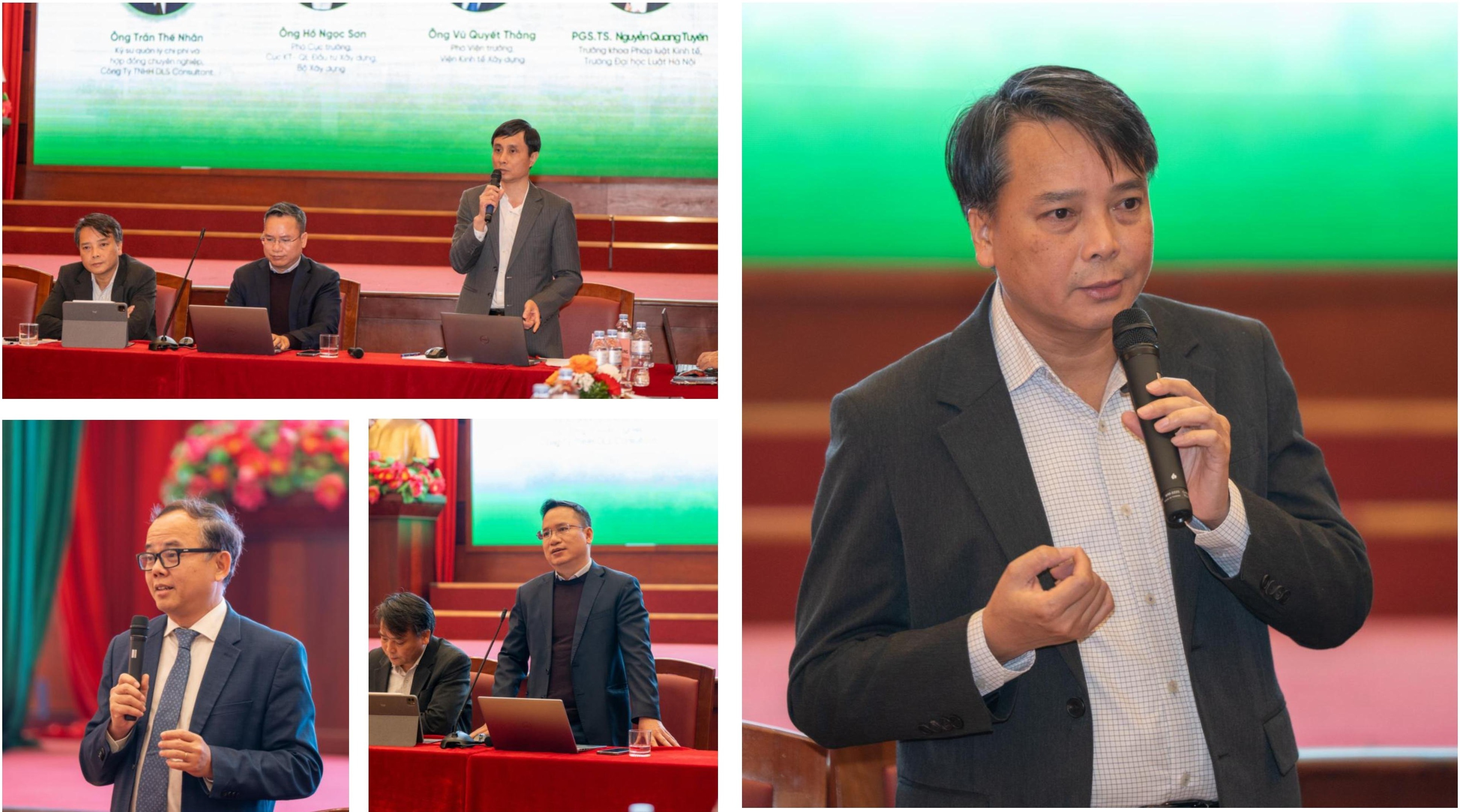
Experts discussing at Session 01
The second discussion session, entitled “Prevention and Resolution of Construction Disputes – Liquidated Damages and Dispute Resolution Mechanisms,” was directly moderated by Lawyer Vu Anh Duong - Vice President cum Secretary General of VIAC. The session featured Mr. Nguyen Bac Thuy - Head of the Construction Economics and Contract Division, Department of Construction Investment Economics and Management, Ministry of Construction, Member of the Executive Committee of SCLVN; Dr. Nguyen Mai Linh - Deputy Head of the Division of International Commercial Dispute Resolution Law, Faculty of International Law, Hanoi Law University; Lawyer Do Khoi Nguyen - Partner (Singapore and Vietnam) at YKVN Law Firm, VIAC’s Listed Arbitrator; and Lawyer Nguyen Phuong Nam - Member of the Professional Training Centre for Hanoi Lawyers, Head of Law Office No. 10.

Overview of Session 02 on “Prevention and Resolution of Construction Disputes – Liquidated Damages and Dispute Resolution Mechanisms”
In the field of dispute resolution, the amended 2025 Law on Construction expands the range of available dispute resolution methods, including mediation, arbitration, courts, and international practices. For public investment projects and PPP projects, the Law prioritizes the use of domestic arbitration and allows dispute resolution costs to be included in the total investment amount, thereby establishing a legal basis for an activity that is almost unavoidable during project implementation. Mr. Nguyen Bac Thuy, representing the Ministry of Construction, emphasized that, specifically for public investment and PPP projects, where arbitration is selected, the new Law prioritizes domestic arbitration; meanwhile, the dispute resolution method shall be decided by the investment decision-maker. In addition, dispute resolution costs are included in the total investment amount, creating a legal basis for an activity that is difficult to avoid during project implementation.
From his professional practice, Lawyer Nguyen Phuong Nam - Member of the Professional Training Centre for Lawyers of the Hanoi Bar Association, pointed out groups of contractual provisions that commonly give rise to disputes, including payment conditions, final settlement, and deadlines for completion of work. The more specific the contract, the less room there is for disputes. When difficulties arise, parties should prioritize negotiation and focus on “remedying deficiencies” rather than assigning blame. He also emphasized the importance of documentation, evidence, and the synchronized design of schedules, payment arrangements, and implementation capacity. Otherwise, disputes can easily develop into “mixed fault” situations where responsibility becomes difficult to determine.
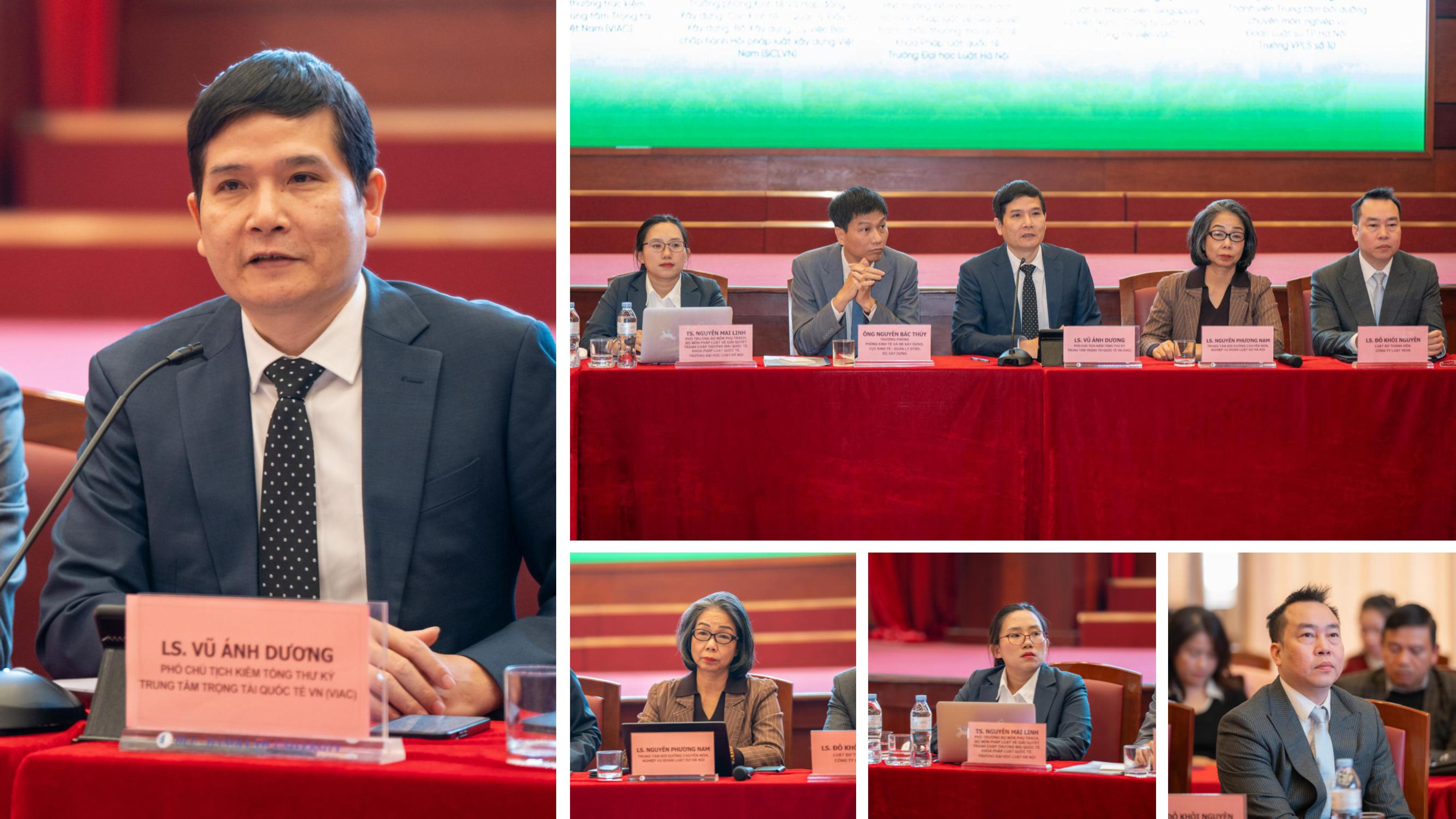
Experts discussing at Session 02
From a statistical and dispute causation perspective, Dr. Nguyen Mai Linh from the Faculty of International Law, Hanoi Law University, stated that construction contract disputes are highly complex. Effective identification and resolution require reliance on data and classification based on different types of contracts and specific contexts. According to aggregated international reports, the two most common causes of disputes, including those arising from contracts involving foreign elements, are the quality of contract drafting and parties’ failure to properly perform their contractual obligations.
Regarding damages, the new Law introduces the method of “liquidated damages” in addition to compensation based on actual damages, aiming to address practical difficulties in quantifying losses. Accordingly, Mr. Nguyen Bac Thuy and Lawyer Do Khoi Nguyen clarified the application of liquidated damages in the context of the new legal framework, enabling parties to quantify risks at the time of contract execution. This helps minimize the need to prove complex actual damages, which has traditionally been a major bottleneck in construction disputes.
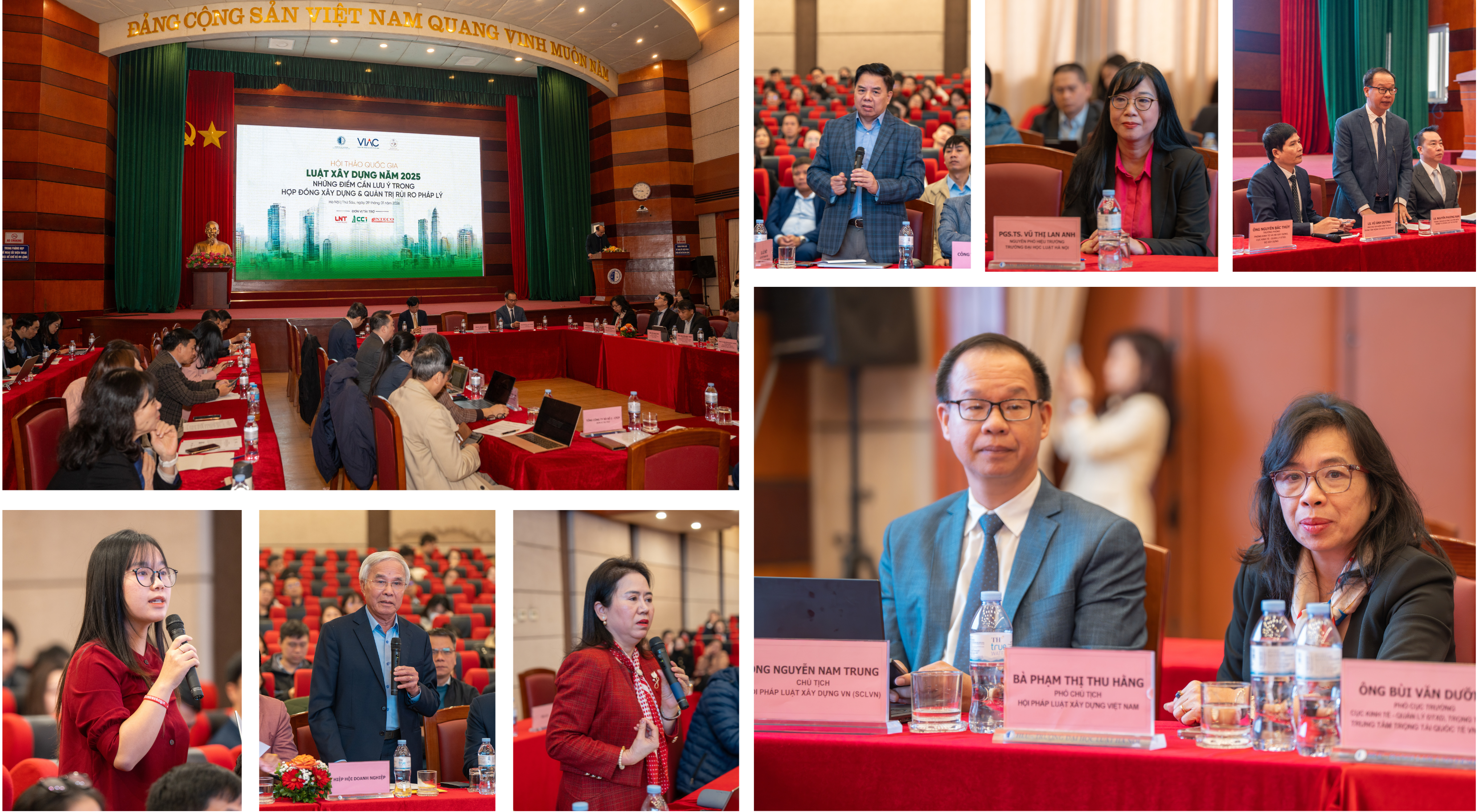
Overview of the conference
At the conference, it is agreed that the 2025 Law on Construction represents a positive step forward in institutional reform. However, for the law to fully realize its value, it is necessary to continue raising awareness, promoting a legal culture, and supporting businesses in proactively managing risks. When the law becomes a tool for support rather than a barrier, the construction sector can truly achieve sustainable development and contribute to the country’s socio-economic growth.
In his closing remarks, Mr. Nguyen Nam Trung - President of the SCLVN, also noted that the new law creates a broader legal framework while simultaneously imposing higher requirements on practitioners, from engineers to managers. Proper understanding, accurate application, and flexible implementation of the new regulations are decisive factors in ensuring the effectiveness of the law in practical construction investment activities.
The conference contributed to supporting the business community, practitioners, and stakeholders in the construction sector in accessing, properly understanding, and effectively applying the new provisions of the amended Law on Construction, while enhancing awareness of legal risk prevention and management throughout the investment and project implementation process. In addition, the seminar served as an important forum for academic and practical exchange, enabling practicing lawyers and legal researchers to analyze, provide critical perspectives, and contribute opinions on the new regulations, thereby providing valuable practical foundations for the process of developing and improving guiding decrees for the implementation of the 2025 Law on Construction.


![[Recap LMS 2026] Business Legal Lens (BLL) #02: “Force majeure: The gap between business understanding and legal approach”](/images/News-and-Events/2026/News/LMS 2026/BLL02/IMG_0136.jpg)
![[Recap LMS 2026] VIAC & ITPC co-organized the Business Legal Lens (BLL) #01: “Conditions precedent in loan agreements: Understanding correctly to prevent risks”](/images/News-and-Events/2026/News/LMS 2026/BLL 01/IMG_8873.jpg)
![[Recap LMS 2026] Talkshow “Exemption from liability for technology-related risks in logistics transactions”](/images/News-and-Events/2026/News/LMS 2026/Logistics/LMS2026_2708---Slideshow-1.jpg)
![[Recap LMS 2026] Talkshow “Commercial contracts with counterpart clauses – Streamlining contract formation or increasing legal risks?"”](/images/News-and-Events/2026/News/LMS 2026/Thuong mai/LMS2026_2008_Speakers.png)
![[Recap LMS 2026] Talkshow “Arbitral jurisdiction in resolving disputes arising from digital financial transactions"](/images/News-and-Events/2026/News/LMS 2026/Tai chinh/LMS2026_260813__Backdrop.png)



.png "Trường đại học ngoại thương")